A stablecoin is a crypto asset designed to track a reference value, usually one U.S. dollar or euro. It is not the same thing as a bank deposit, a guaranteed dollar, or a risk-free savings account: the token can trade away from its target when reserves, collateral, liquidity, redemption access, or confidence breaks.
Unlike unbacked, highly volatile cryptocurrencies such as Bitcoin or Ethereum, stablecoins aim to provide a lower-volatility digital price rail. They combine blockchain transferability and 24/7 availability with a reference price, but the result depends on a mechanism that someone must operate: an issuer reserve, a collateral vault, a derivatives hedge, or a supply rule.
Stablecoin architecture: six models to recognize
Evaluate the design rather than assuming all stablecoins share the same promise. Fiat-backed tokens depend on issuer reserves and banking access; crypto-backed tokens depend on collateral and liquidation; synthetic dollars depend on derivatives; commodity-backed tokens depend on an off-chain asset and custodian; and tokenized Treasury products may behave more like investment instruments than payment money.
| Stablecoin Category | Primary Examples | Stabilization mechanism | Primary advantage | Main risk factor |
|---|---|---|---|---|
| Fiat-backed | USDC, USDT, PYUSD, EURC | Issuer holds cash, deposits, or short government assets | Familiar unit and direct issuer model | Issuer, bank, freeze, and jurisdiction risk |
| Crypto-collateralized | DAI, USDS, GHO | Smart contracts hold more crypto value than debt issued | On-chain visibility and DeFi composability | Liquidation, oracle, and governance risk |
| Synthetic dollar | USDe | Spot crypto is hedged with short derivatives | Crypto-native carry and transferability | Funding, exchange, custody, and hedge risk |
| Algorithmic / reflexive | Legacy designs; not a current recommendation | Supply rules and incentives defend the target | Low explicit reserve requirement | Confidence spiral and thin liquidity |
| Commodity-backed | PAXG, XAUT | Token claims reference vaulted gold | Exposure to a non-fiat reserve asset | Custody, redemption, and gold-price risk |
| Tokenized Treasury / yield dollar | USDY and similar products | Short Treasuries or credit instruments support a yield-bearing token | On-chain access to traditional yield | Securities, liquidity, eligibility, and rate risk |
1. Fiat-Backed Dollars (USDC, USDT, PYUSD)
Fiat-backed stablecoins represent the most straightforward digital dollar structure, but “1:1 backed” does not mean every wallet holder has an instant legal claim to a bank dollar. Issuers hold cash, deposits, Treasury bills, or similar assets, while minting and redemption may be limited to verified customers, approved jurisdictions, minimum sizes, and specific service routes. Compare the issuer’s USDC reserve disclosure with Tether’s reserve reporting rather than treating the backing label as proof by itself.
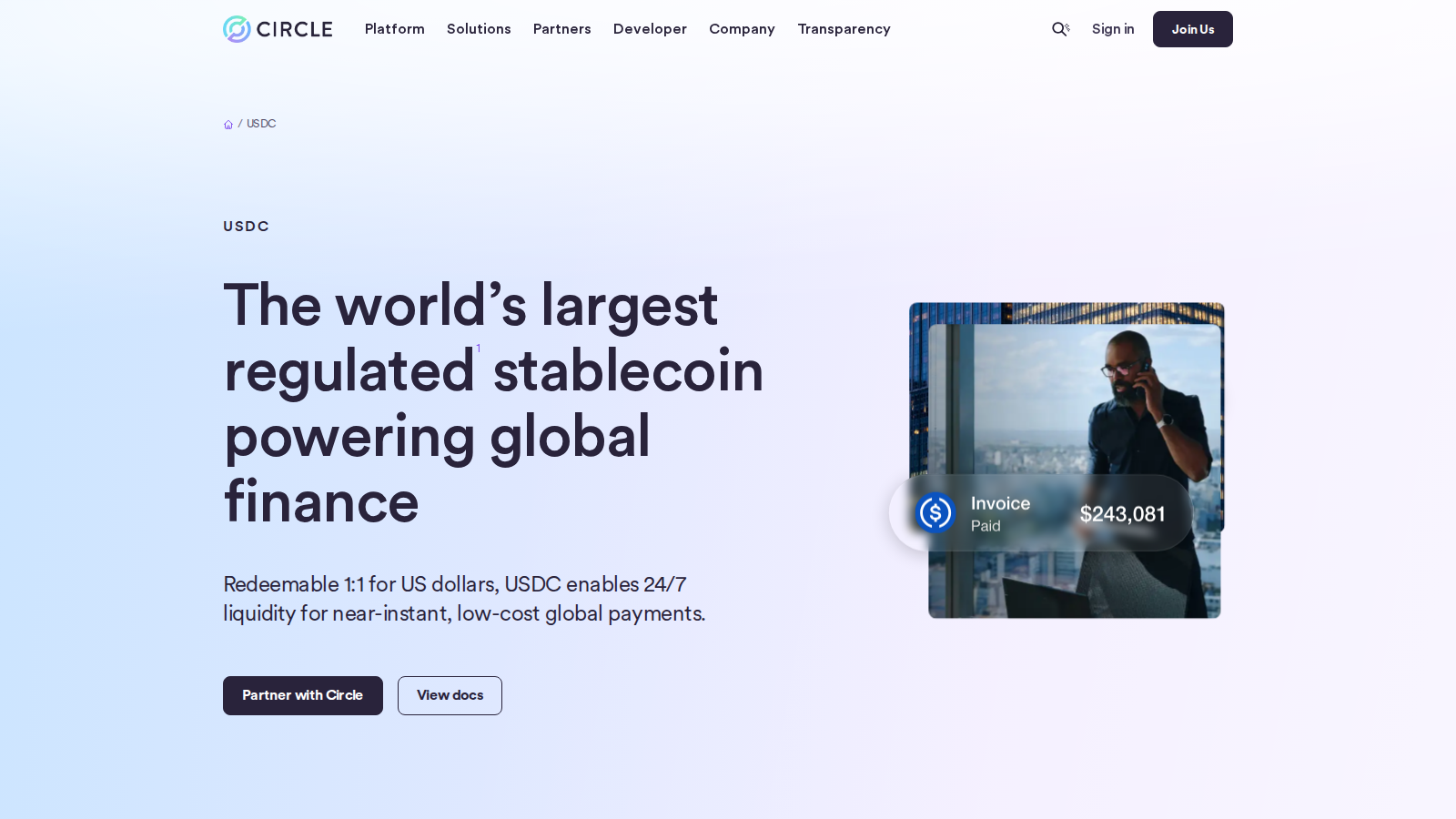
When an eligible institutional client deposits $1,000,000 with an issuer such as Circle or Paxos, the issuer may mint 1,000,000 tokens into the client’s wallet. A secondary-market user may instead buy the token on an exchange and have no direct redemption relationship with the issuer. The practical checks are reserve reporting, issuer terms, freeze powers, supported chains, and the recipient’s ability to convert or redeem.
2. Decentralized Crypto-Collateralized Tokens (DAI, USDS, GHO)
Crypto-collateralized stablecoins replace a simple corporate reserve promise with smart-contract collateral vaults on public blockchains such as Ethereum. Protocols require borrowers to lock volatile crypto assets, stablecoins, or real-world-asset positions above the value of the debt. There is no single universal ratio: the required buffer varies by collateral type, protocol, oracle, and governance parameter.
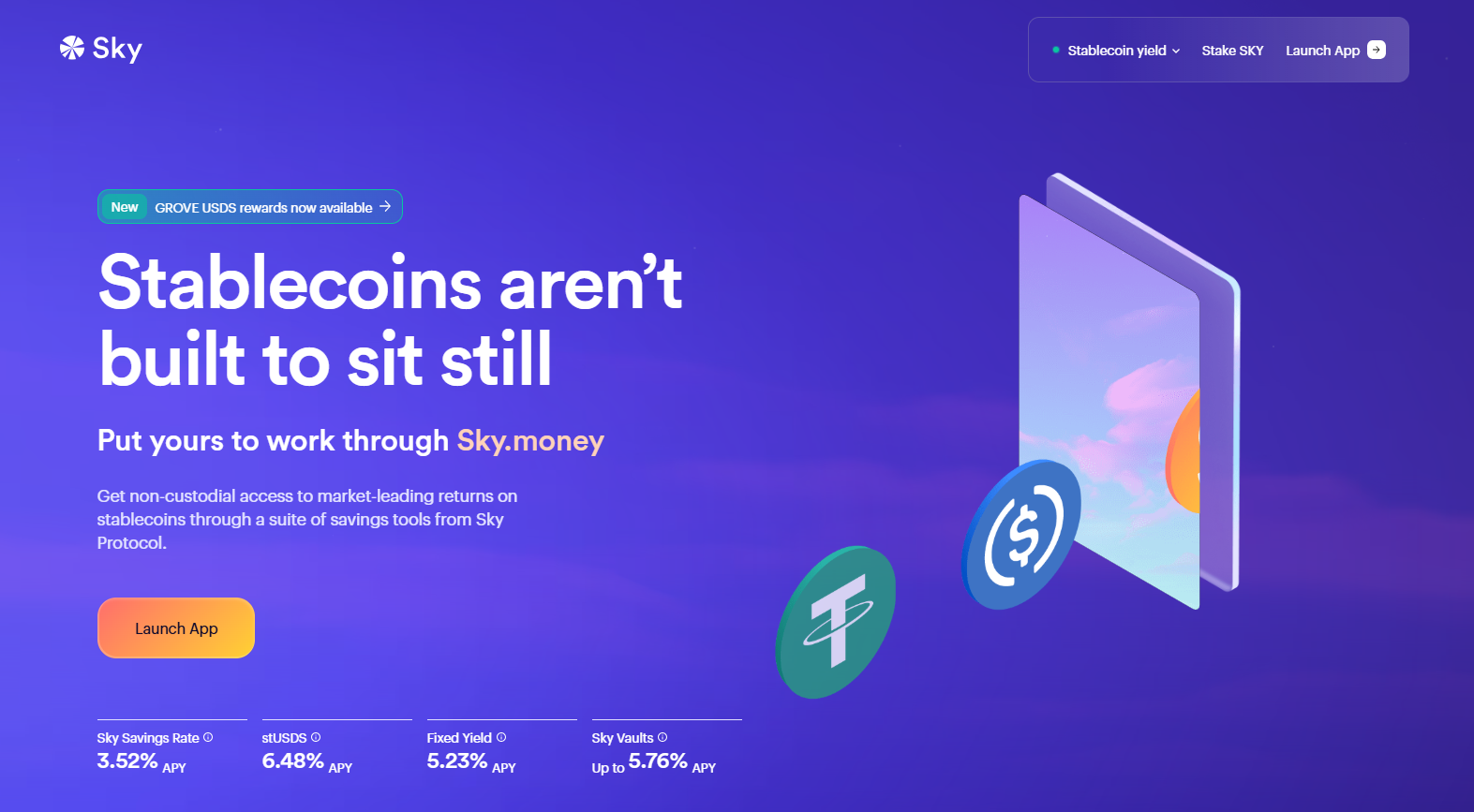
If a borrower deposits $150 worth of ETH into a Sky vault and mints $100 of debt, a market fall can reduce the safety buffer. Liquidation keepers may sell collateral when the position reaches its threshold. This mechanism reduces reliance on a bank redemption desk, but it does not guarantee solvency: oracle delays, auction liquidity, governance changes, smart-contract bugs, and collateral correlation still matter.
3. Synthetic Yield Dollars (Ethena USDe)
Synthetic dollars maintain price stability through financial derivatives engineering rather than holding traditional fiat cash reserves. Ethena USDe holds spot Ethereum collateral while simultaneously opening short 1x perpetual futures contracts on derivative exchanges.
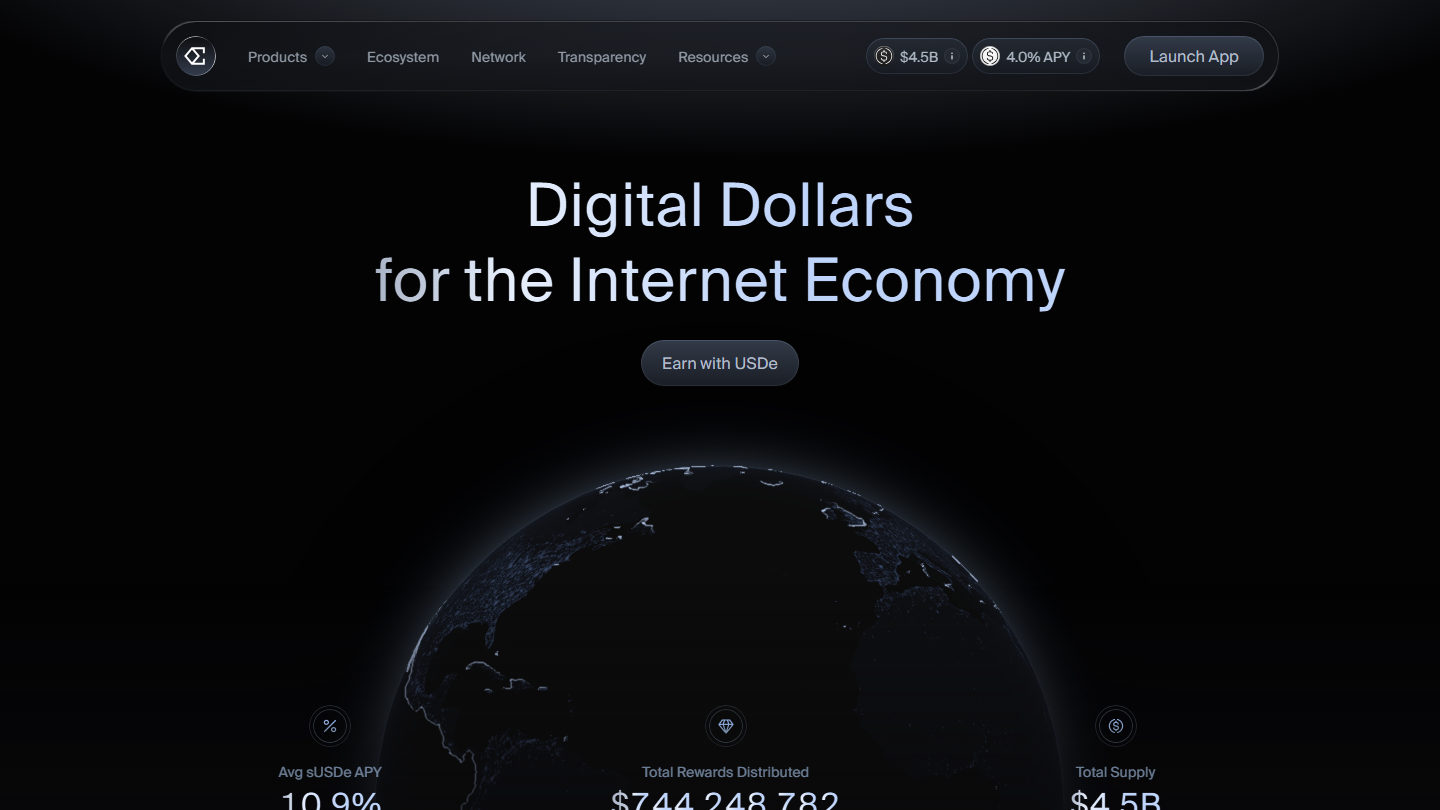
The hedge is intended to reduce directional price exposure, not eliminate every risk. When ETH prices drop, gains on short futures can offset losses on spot exposure, but the result still depends on exchange access, custody, funding rates, liquidity, counterparty limits, and the ability to rebalance. A synthetic dollar is therefore not equivalent to cash reserves even when the hedge is working.
4. Algorithmic and Reflexive Models: A Legacy Category
Algorithmic and reflexive stablecoins attempt to maintain a $1.00 peg through smart-contract supply expansion, contraction, incentives, or a linked volatile token rather than a clearly defined reserve of cash, crypto collateral, or hedged positions. This category should be treated as a risk pattern to recognize, not as a shortlist of products to buy.
The practical test is whether demand can fall without forcing the system to issue an expanding amount of a weaker support asset. If confidence, liquidity, and demand decline together, the stabilizing loop can work in reverse. A current stablecoin comparison should therefore disclose this category separately and avoid presenting collapsed or discontinued projects as live options.
5. Commodity-Backed Tokens (PAXG and XAUT)
Commodity-backed tokens track an asset such as gold rather than a fiat currency. PAXG represents allocated gold held through Paxos, while XAUT is designed to represent ownership of physical gold held by Tether. The token can provide on-chain exposure to gold, but it does not behave like a dollar stablecoin: its market price should move with gold and may trade differently across venues.

The important checks are the custodian, the allocation or bar records, redemption minimums, supported jurisdictions, and the spread between token price and the underlying commodity. Review Paxos Gold information and Tether Gold’s product terms before describing either token as cash-equivalent or suitable for payment settlement.
6. Tokenized Treasury and Yield Dollars (USDY)
Tokenized Treasury and yield dollars use short-duration government securities or related assets to support a transferable token that may distribute yield. USDY is a useful example of why this model needs its own category: the holder is assessing an on-chain investment product, not simply choosing a payment stablecoin with a fixed dollar claim.

That difference changes the decision. Eligibility, jurisdiction, transfer restrictions, settlement, issuer structure, interest-rate exposure, and secondary-market liquidity can matter as much as the token’s target price. The Ondo USDY product page is the right starting point for checking those terms; do not assume that a yield-bearing dollar token has the same access or redemption mechanics as USDC or USDT.
How Peg Mechanics and Arbitrage Maintain $1.00 Stability
Arbitrage can help pull a stablecoin toward its target, but it is not an automatic guarantee. It works only when traders can access enough liquidity, the relevant mint or redemption route is open, fees are smaller than the price gap, and the market trusts that the backing or collateral will remain available.
When eligible institutional demand pushes a fiat-backed token to $1.02, an approved participant may acquire or deposit $1.00 of backing, mint at par, and sell the new token for the premium. The trade expands supply, but retail holders cannot assume they have the same minting access or that the $0.02 spread survives fees, delays, or limits.
If panic selling pushes a token to $0.98, an eligible participant may buy at a discount and redeem at par, contracting supply. If redemption is closed, restricted, delayed, or unavailable for that holder, the arbitrage loop weakens and the token can remain below its target. Crypto-collateralized and synthetic tokens use different liquidation, market-making, and hedge routes rather than a simple bank-wire loop.
Redemption is a right with conditions, not a universal guarantee
Check the issuer’s actual redemption terms before calling a token “fully redeemable.” The relevant questions are who may redeem, what KYC is required, which jurisdictions are served, whether a minimum size applies, how long settlement takes, and whether the holder has a direct issuer relationship or only an exchange balance.
For some fiat-backed stablecoins, verified institutional users may deposit tokens through an issuer portal and receive dollars by bank transfer. That creates a strong arbitrage anchor, not an absolute floor for every market participant. A token can still trade below par because of exchange liquidity, chain congestion, sanctions, banking access, issuer risk, or a temporary pause in minting and redemption.
| Question | Why it matters | What a reader should verify |
|---|---|---|
| Who can redeem? | Holder access changes the strength of the peg | KYC, account type, jurisdiction, and minimum size |
| What is the backing? | A claim is only as credible as the reserve or collateral | Reserve report, collateral composition, or hedge description |
| Where can it exit? | A token may be liquid on one venue and thin on another | Exchange, issuer, bank, local currency, and chain route |
| What can freeze or delay it? | Operational restrictions can appear before a visible depeg | Contract controls, banking terms, sanctions, and settlement time |
Practical Stablecoin Use Cases in 2026
Match the token to the task rather than treating all stablecoins as interchangeable:
- Trading & Quote Asset: Use USDT for deep exchange order book liquidity across spot and futures markets.
- Global Payments & Payroll: USDC or PYUSD may fit a compliance-sensitive flow when the recipient, issuer terms, chain, and local exit are confirmed. A low network fee does not guarantee low total payment cost; CoinLineup’s analysis of stablecoin payment settlement shows why the local payout rail matters in practice.
- DeFi Lending & Vaults: DAI, USDS, or GHO may fit a protocol-native position, but collateral, liquidation, oracle, and governance risk replaces simple issuer risk. CoinLineup’s DeFi stablecoin guide compares those protocol mechanics before a user chooses a vault.
- Yield Generation: sUSDe or Sky Savings Rate products are yield positions, not automatically cash. Their return depends on funding, governance, collateral, or smart-contract conditions.
- Euro Settlement: EURC can reduce currency mismatch for EUR invoices, but smaller liquidity and redemption access must be checked before a business relies on it.
Stablecoin models in actual use
To understand a stablecoin, follow one token from collateral or hedge to minting, transfer, and redemption. The models differ because the failure point sits in a bank reserve, collateral vault, derivatives hedge, commodity custodian, tokenized security, or algorithmic supply loop. The same ticker can use different contracts across chains, so the network is part of the asset identity.
Stablecoins are also not the same as CBDCs, tokenized bank deposits, or money-market funds. A stablecoin is generally a private crypto token with its own issuer, contract, reserve, and access rules. A tokenized Treasury product may track a dollar but still carry securities eligibility and transfer restrictions.
A stablecoin decision in five checks
Use this order when reviewing any new token: identify the reference asset, name the backing, locate the mint and redeem controls, test the chain contract, then write down the failure mode. This prevents a marketing label such as “stable” from replacing an actual design review.
| Check | What to record | Pass condition |
|---|---|---|
| Reference | USD, EUR, or another unit | The token and the user’s payment need match |
| Backing | Reserve, collateral, hedge, or algorithm | The mechanism is documented by a primary source |
| Exit | Issuer, exchange, protocol, or pool | A realistic route exists for the intended user |
| Network | Canonical contract and supported chain | The recipient can verify the exact asset |
Why regulation changes the practical answer
Regulation does not turn a stablecoin into cash, but it can change who may issue it, where it can be listed, how reserves are disclosed, and whether a business can use it for payments. A token that works on a global exchange may be restricted on a regulated European venue, while an issuer’s redemption terms may vary by customer and jurisdiction.
For enterprise payments, document the issuer, reserve report, recipient country, chain, sanctions screening, custody provider, and fiat off-ramp. CoinLineup’s stablecoin regulation article provides policy context; its USDT-to-USDC Europe report shows how venue rules can change the usable asset. Check current issuer terms before transfer.
Wallet support is another practical layer. A token can be valid on-chain and still be unusable for a customer or payroll recipient if the wallet does not support the exact network or contract; CoinLineup’s Samsung Wallet stablecoin coverage illustrates why custody support belongs in the comparison.
Conclusion
A stablecoin functions as a digital dollar rail that bridges traditional banking with public blockchain networks. Evaluating an asset’s collateral model, redemption rights, and issuer transparency ensures market participants select the optimal token for specific financial operations.
Frequently asked questions
What backs a stablecoin?
Backing can be bank reserves, crypto collateral, a derivatives hedge, or an algorithmic supply mechanism.
Why can a stablecoin lose its peg?
A peg can fail when redemption, collateral, liquidity, or the mechanism supporting arbitrage stops working.
Are all stablecoins centralized?
No. Fiat-backed tokens rely on a centralized issuer, while DAI, USDS, and GHO use protocol contracts and governance. Synthetic and algorithmic designs add different dependencies, but decentralized issuance does not remove oracle, collateral, liquidity, or governance risk.